

By Kevin Flowers, Bossier Parish History Center
Just as 2026 marks America’s 250th birthday, so too does the year mark a milestone for Bossier City. Exactly seventy-five years ago, Bossier officially became a city.
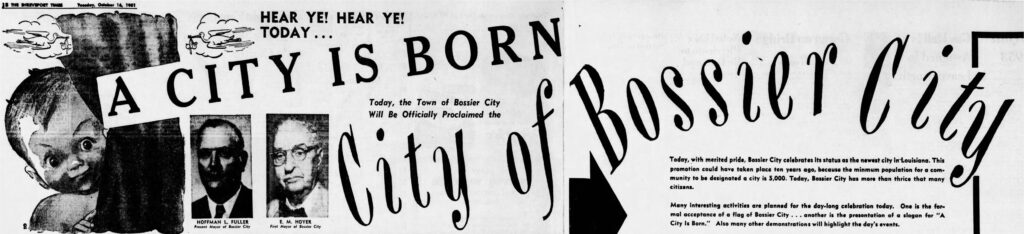
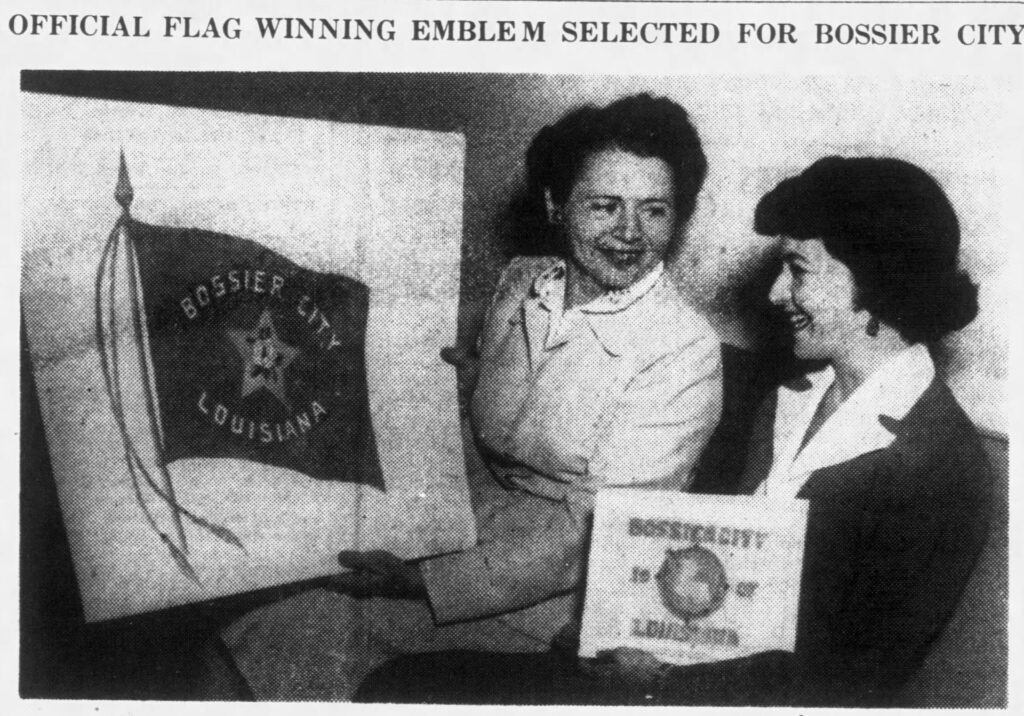
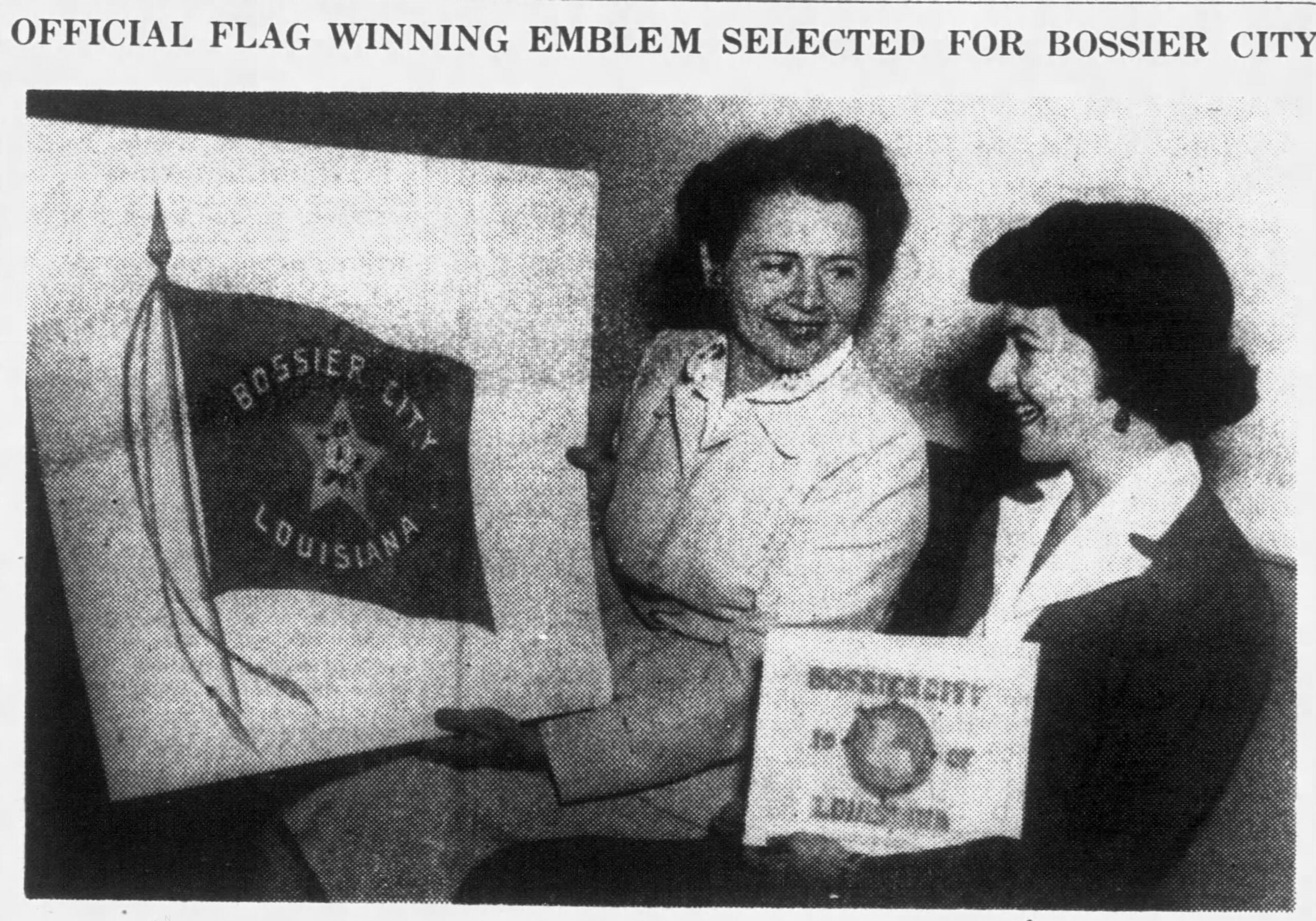
Plans were announced to mark the auspicious occasion. Newspapers heralded the event with headlines proclaiming “A City is Born.” The Planters Press newspaper of Bossier Parish announced a competition on August 30, 1951 “for civic-minded Bossier citizens and their neighbors to compete for honors … in a contest from which will emerge a new slogan for this newborn city.” A contest to design an official flag for Bosser was also proposed. Festivities were planned at Bossier High School’s Memorial stadium where crowds could cheer this landmark episode in Bossier’s history.
It’s right there in the name, so hasn’t Bossier always been known as a city, you may ask? The answer is no. Simply having city in the name didn’t make it so. Population numbers came into play. In April 1907, Louisiana Governor Newton Blanchard issued a proclamation incorporating Bossier City as the Village of Bossier City because the area had at least 250 inhabitants. Bossier had developed from property once owned by Mary Bennett Cane along the Red River where the Louisiana Boardwalk and Margaritaville Casino now stand. It was known as Cane’s Landing, a spot where steamboats would dock. According to the book “Images of America Bossier City” by Kevin Bryant Jones, the term Bossier City was being used to describe this area as early as 1884. The parish had been called Bossier since its formation in 1843.
By the Roaring Twenties, the Village of Bossier City had grown and its population topped one thousand. Time for an upgrade. In March 1923, Governor John Parker declared Bossier to be the Town of Bossier City. And thus it remained for the next 28 years.
According to an article in The Planters Press from October 11, 1951, a community needed to have at least 5,000 inhabitants to be a city. U.S. Census Bureau records show Bossier had three times that number by ’51. I’m not certain why Bossier wasn’t proclaimed a city sooner, but all was ready by September of that year and excitement was building. A local polio outbreak caused a postponement of events until the following month, but plans for a celebration remained firm.
The Planters Press enthusiastically promoted those plans. “Ceremonies exceedingly appropriate to the outstanding occasion, representing an indescribably important historical demonstration, will usher in the formal classification of the community as the City of Bossier City,” stated the article of October 11. Five days later, the party got started.
A crowd estimated to number about 7,500 people turned out at Bossier High’s stadium on a Tuesday night and heard a proclamation read aloud from Governor Earl Long officially designating Bossier as a city. A parade, with floats depicting industries that aided in Bossier’s growth, passed the reviewing stands. Bands from Bossier, Byrd and Fair Park high schools, as well as Barksdale Air Force Base, performed for the crowd. The first-place entry in the city slogan contest – “Next Door Neighbor to World’s Largest Airbase”- was announced, authored by Bossier resident Irene Vinson, and the winning design for a city flag was unveiled, created by Velma Hagert of Bossier. The evening concluded with a fireworks show.
Achieving the status of city was a giant leap forward for Bossier. “This is something we have been striving towards for years,” Mayor Hoffman Fuller was quoted as saying in The Shreveport Times, October 17, 1951. The little settlement that sat in the shadow of its neighbor across the river had grown up.
If you have any photos or other information relating to the history of Bossier City or Bossier Parish, the History Center may be interested in adding the materials to its research collection by donation or by scanning them and returning the originals. Call us to learn more. We are currently closed for renovations, but can still be reached by phone at (318) 746-7717, and our email is [email protected]. We can also be found online at https://www.facebook.com/BPLHistoryCenter/ and http://bpl-hc.blogspot.com/