


July 2026
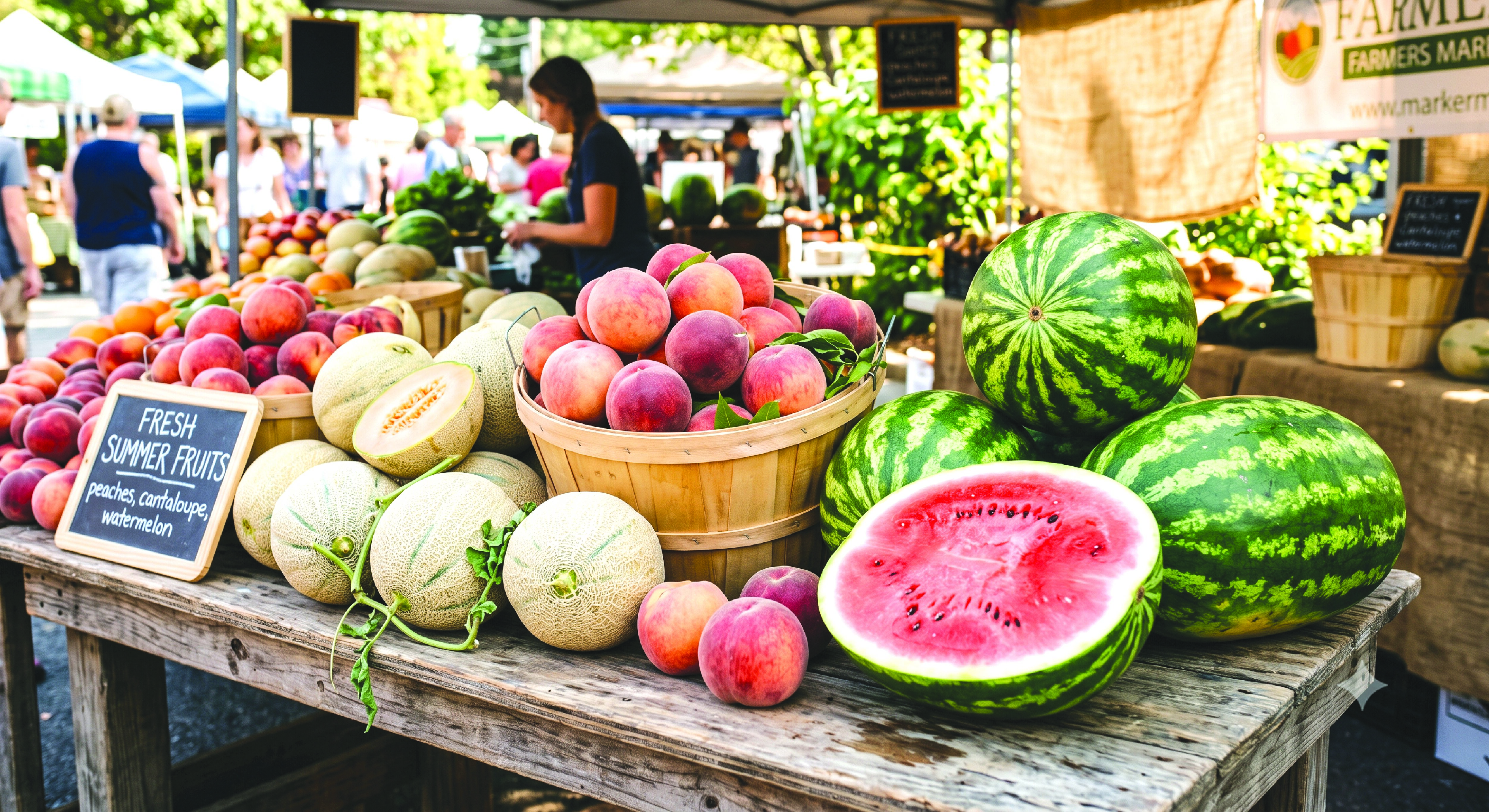
Early July is perhaps one of the best times of the year to enjoy seasonal fruits and although watermelons are still available from Texas and likely also from other producing areas, it’s a real treat to buy and enjoy those that are locally grown. Besides, your support of area farmers is always a good thing. So, what fruits in addition to watermelons can you buy? Strawberries have finished their season on area farms thus only those that are shipped here are available at local groceries. Blackberries have just about finished for this year locally, but you might find a few and, (as with strawberries) good ones can be purchased in our grocery stores. Because blueberries include some late varieties, they are still locally available and should be for several more days. When buying blueberries, select those that are a solid blue color and are firm.
Peaches grown on area farms have been available for several days, but nearly all are of the cling type. Freestone peaches are those whose pit separates easily from the surrounding fleshy part that we eat so when you buy them make sure there are no soft spots or bruises. However, many buy over-ripe fruit for immediate eating or processing. Otherwise, select fruit that are fully colored and firm. Firm fruits left on the counter will usually soften in less than a week.
Cantaloupes should now be locally available. Good ones have a fruity aroma and a stem scar that doesn’t have any of the old vine still attached. Usually, most varieties when fully ripe have a nice yellow color.
Watermelons may be the most popular seasonal fruit during the summer. There are many from which to choose from elongated to round and from “ice box size” to more than a 100 pounds. The ice box melons are about the size of a large cantaloupe and thus ideal for a single meal for two to four people. Most people generally choose a melon in the 30 to 50 pound range. Next you have to decide whether to buy a seedless melon or one that contains quite a good number of seed.
Just how do you know when you’re getting a good melon? While “plugging” to get a sample of the inside flesh is now rarely done, the most reliable test is to check the ground spot which is where the melon touched the ground. If that spot is still green or an off-white, it’s probably not fully ripe and you will regret buying it. If it’s a dark yellow color which appears a bit dull, it may be over-ripe and the flesh will likely be somewhat spongy or watery. If the spot is a light yellow color and showing no dullness, then it’s probably in a prime condition for eating.

Joe W. White, Ph.D., Extension Horticulturist, (ret.) LSU AgCenter