


By Creshaun Harris, Bossier Parish Libraries History Center
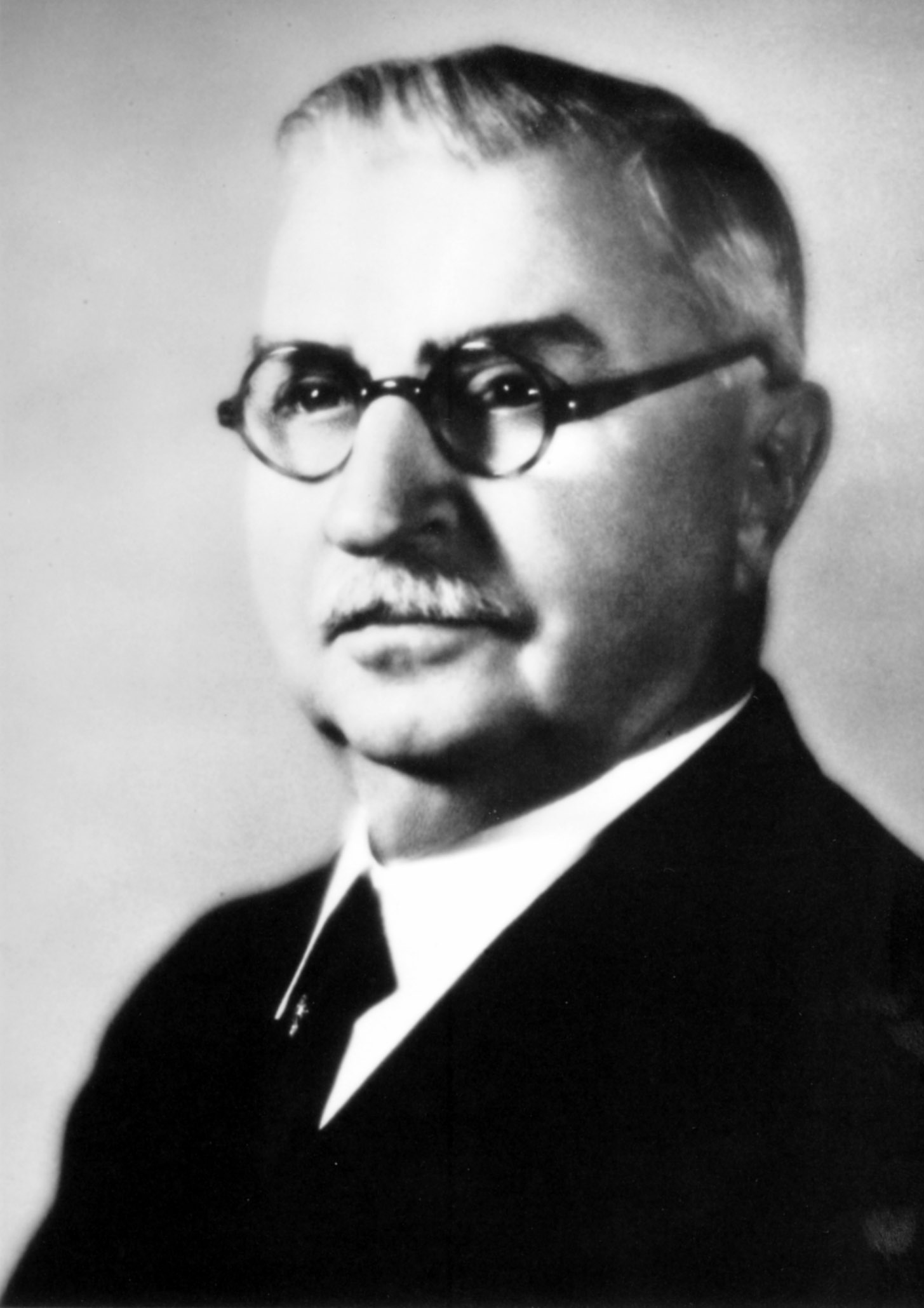
BOSSIER CITY, La. — Long before the engines of Barksdale Air Force Base echoed across the sky, and the loud lights of the casinos outlined the eastern banks of the Red River; Bossier City was a quiet, dusty agricultural hamlet. At the turn of the 20th century, the community lacked necessities, including electricity, natural gas, and a water system. It was a public services frontier that required vision, resources, and determination to transform it into an effective municipality. The man who supplied all three was Ewald Max Hoyer, a dairy farmer and businessman from Marine, Illinois.
Hoyer moved to the community in 1893 alongside his wife, Minnie Bassenberg Hoyer, a native of St. Louis. At the time, the area was known as Cane City, and the landscape was dominated by farmland and the Red River, which separated the community from the commercial hub of Shreveport. Upon arriving, the Hoyers settled on a farm and began purchasing cattle. Ewald then set up a dairy business that would be the largest dairy barn in North Louisiana by 1903. Four years later, the barn sold more than 7,500 gallons of milk per month, a figure that required immense capability to manage without the conveniences of modern milking technology.
Yet the farm’s success was hampered by the region’s lack of infrastructure. For years, residents of the unincorporated community were forced to drive their horse-drawn buggies across the river to Shreveport simply to secure clean water. Growing fatigued, Hoyer took matters into his own hands. In 1902, using his own resources, Hoyer drilled the first deep-water well in Bossier Parish. This provided a reliable water source for the community. The presence of a reliable water supply spurred interest from real estate developers, who later sold more than 700 residential and commercial lots. The promise of these sales was that the community would secure a traffic bridge across the Red River and be officially incorporated as a recognized village.
That promise became a reality on April 18, 1907. Recognizing the growth and need for formal governance, Gov. Newton C. Blanchard officially issued a proclamation incorporating the village and naming it Bossier City. When it came time to select a leader for the new village, Gov. Blanchard did not have to look far. Acting on the recommendations of businessmen and prominent figures, Blanchard appointed Hoyer as the first mayor. His peers cited his administrative prowess, success in scaling the region’s largest dairy operation, and his investment in the community’s infrastructure.
Hoyer’s tenure as mayor was defined as a brand of public service. He never accepted a cent as mayor. In fact, he functioned as the city’s primary financier. When Bossier City needed a seat of government, Hoyer used $1,200 of his own money to fund the construction of the first city hall. Furthermore, because the village government lacked a treasury, Hoyer advanced the funds needed to cover the municipality’s expenses. As mayor, Hoyer delivered the promises made by early developers. He was instrumental in lobbying and securing the federal funds required to construct a traffic bridge across the Red River, linking the economies of Bossier City and Shreveport and ending the era of costly river crossings.
In 1909, the city held its first municipal elections. The citizens voted to re-elect Hoyer for a second term. During this term, the pillars of a community were erected: Bossier City saw the construction of its first schoolhouse and first church. Despite his success, in 1910, Hoyer’s political career was cut short when his wife, Minnie, fell severely ill. Prioritizing his family over politics, Hoyer stepped down as mayor. To be closer to medical care, the couple moved into what is now known as Shreveport’s Bliss-Hoyer House in the Fairfield Historic District. Despite that, Hoyer did not severe ties to the community he helped build.
He kept multiple investments in the community, ranging from real estate development to funding construction for several residential subdivisions. Even through the days of the Great Depression, Hoyer stayed a voice of Bossier City’s inevitable expansion, believing that the area was destined for greatness. He lived to see his faith confirmed multiple times. In 1923, Hoyer watched with pride as population growth prompted Gov. John M. Parker to reclassify Bossier City from village to town. Then, on Aug. 9, 1951, the ultimate milestone was reached. Following the post-World War II boom and the massive influx brought by Barksdale Air Force Base, Gov. Earl K. Long issued a proclamation making Bossier City an official city.
The municipality threw a massive celebration, headlined in local newspapers as “A City Was Born.” The festivities featured a parade beginning at Fort Smith Park. Elaborate floats showcased the industries that had driven the city’s growth: cotton, oil, agriculture, and the military. Seated as a guest of honor at the 1951 celebration was Ewald Max Hoyer, who was 88 years old. Hoyer addressed the crowd and reminisced about the sparse hamlet he had moved to in 1893. He marveled at how a community of a few isolated families had exploded into a municipality of more than 15,000 residents, earning the designation as the “Fastest Growing City in Louisiana.”
Ewald Max Hoyer passed away in 1957. By the time of his death, the population of the city he had breathed life into had swelled to 25,000. Today, Bossier City boasts a population approaching 70,000 and serves as an economic force for the state of Louisiana. Through his own labor and unwavering dedication, Ewald Max Hoyer ensured that the foundation of Bossier City was poured so strongly that it would last for generations to come.
If you have any photos or other information relating to the history of Bossier City or Bossier Parish, the Bossier Parish Libraries History Center may be interested in adding the materials to its research collection by donation or by scanning them and returning the originals. The History Center remains closed while our new exhibits are installed, but you may contact History Center staff by phone or email. Our phone number is (318) 746-7717 and our email is [email protected]. Don’t forget you can explore many of our collections on our website, www.bossierlibrary.org. Look for the History and Genealogy page under Resources and then choose Collections Database. We can also be found online at https://www.facebook.com/BPLHistoryCenter/ and http://bpl-hc.blogspot.com/

Creshaun Harris, Bossier Parish Libraries History Center
Edwald Max Hoyer
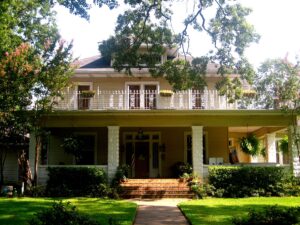
Bliss-Hoyer House in Shreveport, LA