


In the summer of 1944, Allied forces were fighting some of their fiercest or most daring battles, while also reaping some of their most auspicious victories. On June 5, Allied troops entered Rome in the afternoon, and it became the first capital of the Axis Powers to fall. Meanwhile in Normandy, the following day, June 6, was D-Day, the amphibious landing of troops in northern France, opening the Western Front. In July, the Allies pushed inland. In the sweltering summer days of August-September 1944, Allied infantry troops won the bloody battle for the port of Brest in Brittany, and in another amphibious landing in France, the major ports of Marseille and Toulon were reclaimed, easing the Allies’ supply crisis. Meanwhile in the Pacific Theater, Saipan fell in June after a fearsome banzai charge; a decisive clash of carriers in the Philippine Sea crippled Japanese air power, and by August, Guam was recaptured.
In the summer of 1944 at Barksdale Army Air Field, as Barksdale was known prior to the creation of the United States Air Force on September 18, 1947, 35 or more enlisted men were fighting a brave battle of their own, proving they had the basic readiness to be soldiers by attending what the air field newspaper called “elementary school for soldiers who can neither read nor write.” At that time, one of Barksdale’s missions was as to serve as one of the Army Air Corps “replacement training centers”. These centers provided training for newly-enlisted Air Corps soldiers that was not yet specialized for a specific assignment.
Earlier in 1944, President Roosevelt had declared the US Army and Navy were faced with a “grave manpower shortage,” desperately in need of more able-bodied combat replacements. To help meet that shortage, Roosevelt asked the selective service (“the draft”) to revisit service deferments, whether for occupational, dependency, age, or physical or mental fitness requirements. For the same purpose, Chairman Andrew J. May of the U.S. House Military Affairs Committee argued that among other reclassifications, the army “should quit rejecting men because of illiteracy. Men who are illiterate can still be sharpshooters.”
In January of that year, Major Isaac N. Carr, preinduction officer of the Army’s 4th Service Command headquartered in Atlanta, Georgia, announced in a speech to junior college officials, that was covered by the Associated Press, that the United States had 341,000 physically fit men of service age who were functionally illiterate, meaning, at that time, that their reading and writing skills were at a fourth-grade level or below. Carr illustrated this number by saying that was enough physically-able men to make up more than 20 Army divisions.
If the number 341,000 for men whose only barrier to service at that moment was that they read at a fourth-grade (or below) level sounds inordinately high, keep in mind that, although all states had a compulsory education law on the books by 1918, those laws were not consistently enforced across the country until well into the 1930s. That time frame would cover the school years of WWII enlistees. In addition, quality schools and trained teachers were still not available to many African American students in the south during the school years of those enlistees. For example, a high school for African American students in Bossier City did not open until the beginning of the 1940s.
To rectify this deficiency, Army training units were called upon to provide literacy instruction. The Saturday July 1, 1944, issue of the Barksdale’s Bark newspaper announced that “an elementary school for soldiers who can neither read nor write will be started by Base S-3 [the operations and training office] shortly.” The article shared that 35 enlisted men had been assigned by their commanding officers to the school already, and that classes would be held 3 times a day, five days a week. Students were required to attend one of the daily sessions in the school room in the commissary building.
More details about a literacy class were announced in the Bark on Saturday, July 29, 1944. This time it said the classes would be offered in the “Kindergarten building.” This was likely the base’s brand-new preschool for children through the age of 5. The article further stated that “Commanding officers of all units are cooperating with Base S-3 in getting men to attend the classes,” and that “the latest pamphlets from the Armed Institute have been procured for instructional purposes.”
This pamphlet referred to for the literacy classes at Barksdale likely referred to Technical Manual No. 21-500, also known as the “Private Pete” books. These reading primers followed along with solider Private Pete and all that he’d likely encounter in his day-to-day life in the Army. (The Navy had their own booklets, featuring “Sailor Sam.”) These stories adhered to the same basic format and learn-to-read formula as the ubiquitous Dick and Jane readers that young children in school at the time were using. The article also named the teacher of the literacy classes, Mrs. Mary E. Laurent, wife of Lt. Harry Laurent, Jr. assistant S-1 (personnel) officer at Barksdale. Mrs. Laurent, who “offered her services as teacher of the classes,” was introduced to Bark readers as a graduate of Muskingum College in Ohio, and an experienced teacher of English. Both Laurents were from Ohio and had attended Muskingum.
Being singled out by one’s commanding officer to attend classes in a preschool building, with text books modeled after children’s readers, Dick and Jane, could sound like excruciating punishment. Many WWII veterans’ own stories of being able to “go back in time” and learn to read and write, suggest appreciation for the opportunity, however. As for the Laurents, they were married 69 years and lived around the world while Mr. Laurent was an industrial psychologist, and retired in Hendersonville, North Carolina. They continued to value access to education, by establishing a scholarship for students in Henderson County, and endowing a department chair in Psychology at their Alma Mater, Muskingum College, now University.
The Bossier Parish Libraries History Center in the Bossier Central Library complex remains closed while our new exhibits are installed. However, we are continuing to share history in a variety of ways. You can explore many of our collections on our website, www.bossierlibrary.org. Look for the History and Genealogy page under Resources. Feel free to contact History Center staff by phone or email for assistance. Our phone number is (318) 746-7717 and our email is [email protected].
Our next meeting of World War II’s Day, a monthly coffee and discussion program on a variety of WWII-related topics, will be Tuesday, August 11th at 10:30 AM in the Bossier Central Library Complex’s large meeting room. Because August 6, 2026, is the 81st anniversary of the atomic bombing of Hiroshima, Japan, Dr. Cran Lucas, Emeritus Professor of Biological Sciences at LSU Shreveport, will present “Hiroshima and the Aftermath”. We hope you can make it, and stay tuned for the re-opening date of the History Center and its new exhibits!
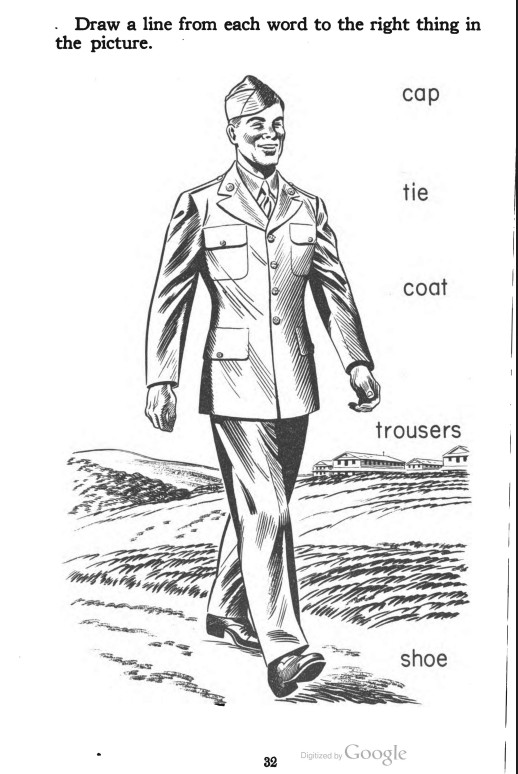
Sample page (32) from U.S. War Department Technical Manual 21-500 “Army Reader” May 14, 1943, a.k.a. “Private Pete.” https://scholarworks.moreheadstate.edu/cgi/viewcontent.cgi?article=1048&context=stu_1210th_fort_ontario
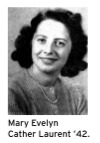
Mary Evelyn Cather Laurent, from Muskingum Update, Spring 2009