



Ryan E. Gatti
Picture Shreveport–Bossier in the early 2030s. Not the version defined by decline, stagnation, or the memory of what we used to be — but a region finally using its geography, workforce, and political influence the way other Southern cities used theirs to grow into something bigger and better. A place young people move to, not from.
For decades, we have waited for change. Now, for the first time in a generation, change is waiting for us — waiting for us to push our elected leaders to prioritize infrastructure and jobs instead of allowing every Town Hall to be consumed by divisive issues designed to pit neighbor against neighbor. Change is waiting for our politicians to call in their favors and accelerate long-overdue infrastructure projects.
Across the country, manufacturing is returning to the United States. Data centers and high-tech infrastructure are moving inland. Companies are fleeing high-cost metros and searching for cheaper power, plentiful water, available land, and a willing workforce. These trends don’t favor New York, Chicago, or San Francisco.
We offer all the right ingredients: low-cost land, unlimited water, abundant energy, and citizens ready to upgrade their income while staying in the community they were raised in.
These trends favor regions exactly like Shreveport–Bossier. And that’s why the next decade matters more than the last forty.
A Region Built on Logistics — If We Finish the Job
Shreveport-Bossier already sits on the spine of I-20 and I-49. But I-69 completes the triangle — connecting us to Houston, Dallas, Memphis, St. Louis, and the entire Midwest manufacturing belt in a single, uninterrupted freight corridor. No other metro in Louisiana has this opportunity. No other city in the state can become the central hub of a three-interstate logistics triangle.
Ask our local leaders what their vision is for the land inside this triangle of I-20, I-49, and I-69. Will it be manufacturing? Defense? High-tech campuses? Higher education? What is the plan?
Although this interstate would transform our region in a profoundly positive way, we have seen no public Town Halls focused on fast-tracking I-69 from I-30 in Arkansas to I-59 in Texas. And pretending there is no competition for this corridor does not make it so. Right now, the congressional delegations in Texas and Arkansas are quietly re-routing I-69 around us — while their Town Halls focus on concrete, jobs, and economic growth. Their leaders work across party lines to build loops, bypasses, and business corridors that accelerate development.
We currently have the national political influence to nail down — and fully fund — the most important missing piece of the corridor: the stretch of I-69 from I-30 in Arkansas, through Claiborne, Webster, Haughton, and the Port of Caddo-Bossier, all the way to U.S. 59 in Texas.
This is the section that transforms us from “a city on I-20” into a Southern logistics superconnector — the pivot point between the Gulf Coast, the Texas Triangle, and the central United States. It unlocks manufacturing distribution, e-commerce fulfillment, regional warehousing, rail-to-truck intermodal expansion at the Port, new industrial megasites, and national site-selector attention we have never received.
This isn’t theory — it’s geography. And geography doesn’t lie. If the project began today, our current fifth and sixth graders would graduate into a region where they can build careers and families. We would no longer lose our best students to Dallas, Nashville, and Atlanta. Families would move here.
Right now, Louisiana holds more influence in Washington and Baton Rouge than at any time in recent memory. With a dream team of public servants who genuinely love Northwest Louisiana — Johnson, Kennedy, Landry, Seabaugh, Bass, Pressley, Melerine, Crews, Peacock, Horton, Bamburg, McMahen, and Bagley — we have nearly 100 years of seniority in powerful seats and committees.
Securing federal, state, and local matching dollars has never been easier from a political power standpoint. If we push hard, we can secure the funds for the Shreveport-Bossier section of I-69. If we do not, that influence will fade — and the chance will not come again soon.
A Port With Endless Potential
Few cities our size have an inland port with rail access, barge access, interstate access, developable industrial acreage, and a capable, eager workforce. The Port of Caddo-Bossier is a competitive advantage almost no one outside our region understands — because we haven’t marketed it, funded it, or expanded it to its potential. But we can. And with I-69, we will.
Companies reshoring production need landing zones for EV and battery components, aerospace and defense machining, plastics and packaging, cold storage and food processing, medical device assembly, and semiconductor support manufacturing.
Imagine companies landing goods at the Port, then hopping onto I-69 and delivering in Houston within three hours — entirely on interstate.
These industries are already moving to the American South. They are looking for the exact assets we have — if we choose to compete.
Our Data Center Moment Won’t Come Twice
Data centers choose cities with reliable water, reliable power, land, moderate climate, affordable taxes, and stable geology. Shreveport-Bossier checks every box — and then some.
One hyperscale data center campus can transform the region with $5–10 billion in construction, thousands of indirect jobs, long-term infrastructure upgrades, tech-adjacent industry, rising wages, expanded air service, and new restaurants, retail, and services.
Other Southern cities changed their destiny through data infrastructure alone. Chattanooga did it. Huntsville did it. We can, too — but only if we start preparing shovel-ready land, utilities, and incentives that say, ‘Build it here.’
A Labor Market Ready for the Future
We have something fast-growing metros don’t: available workers, available land, low cost of living, a technical college producing highly skilled trades, and room to build entire industrial districts, neighborhoods, and logistics parks. Companies want places where they can grow. Our region is still one.
This is the moment we shift from “stable but stagnant” to a true growth engine that attracts families, professionals, and long-term employers.
It All Depends on Leadership — And Us
We have rare alignment: congressional representation with national influence, a state administration focused on economic development, and local leaders positioned to open doors — or close them.
But influence is only as valuable as the infrastructure it produces. This is the time to demand I-69, grid upgrades, port expansion, competitive industrial power rates, modern water systems, and streamlined permitting that attracts employers instead of scaring them off.
If political power does not translate into pipes, roads, rails, runways, and megasites, then this moment will pass — and it will not return.
The Future Will Belong to the Cities That Ask for It
The future doesn’t come to regions that whisper. It comes to regions that demand their share of investment.
Email your Congressman. Email your U.S. Senator. Email your State Representative and State Senator. Tell them: ‘Bring our federal tax dollars home. Fix decades of deferred maintenance. Fund the completion of I-69. Modernize our grid. Make industrial power affordable. Expand our port. Don’t let Shreveport-Bossier miss the economic boom reshaping the South.’
When you attend public meetings, don’t oppose every development. Don’t repeat the 35-year obstruction and endless committees that delayed inner-city I-49. Don’t just protest — offer solutions. Our reputation of endless process and minimal progress must change.
Make your conditions known — transparency, competitive power costs, environmental protections — but don’t settle for 5,000 hearings over 35 years with no results. Cities that grow solve problems. Cities that stagnate avoid them.
Shreveport-Bossier has the land, the location, the labor, the logistics, the political moment, and the rare national tailwinds of reshored manufacturing.
The only question is whether we will seize this moment — or let it drift by while cities with less political clout build the future we were supposed to have.
The next 10 years are ours to win or lose. Let’s choose to win.
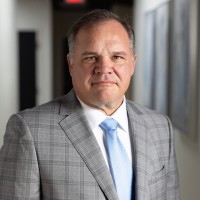
Ryan E. Gatti is an attorney in Bossier City, Louisiana. He is a former state senator who represented Louisiana Senate District 36.